
What will the future of money look like? How will digital currencies and new technologies reshape the way we pay and the institutions we rely on? And can regulations designed to make banks safer sometimes have the opposite effect? These are some of the questions explored by Maxi Guennewig, our new CERGE-EI faculty member. Previously a research economist at the European Central Bank, Maxi brings a fresh perspective on some of the most pressing challenges facing our financial systems.In this introductory interview, he shares what sparked his interest in the future of money, discusses surprising findings from his research, and reflects on his move to Prague. Continue reading Meet Maxi Guennewig: Rethinking the Future of Money

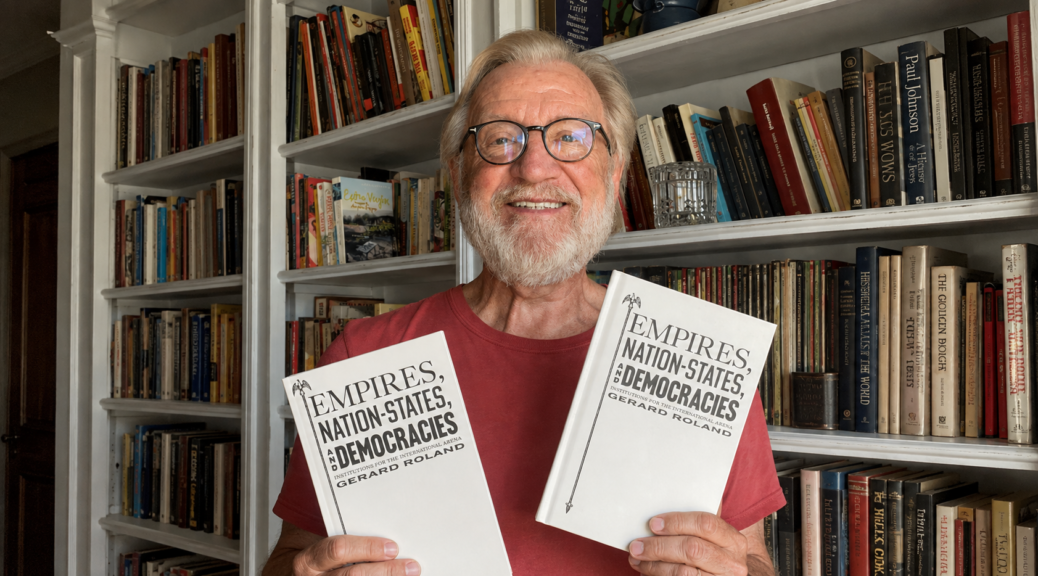
Gérard Roland: Democracy’s Future Lies Beyond the Nation-State
In the new book Empires, Nation-States, and Democracies, Gérard Roland argues that the great political struggle of the coming decades will not simply be between democracy and authoritarianism, but between competing models of political organization: empires, ethnic nation-states and open democracies. Professor Roland has a long-standing connection to CERGE-EI, having served for many years on its Executive and Supervisory Committee (ESC) and as a member of the CERGE-EI Board of Trustees. In this interview, he explains why nation-state projects ultimately collide with democratic values, why Russia and China face structural vulnerabilities, why American retreat could reshape the global order, and why he remains optimistic about democracy’s long-term future despite today’s democratic backsliding, wars and geopolitical instability. Continue reading Gérard Roland: Democracy’s Future Lies Beyond the Nation-State

Designing Experiments for Better Policy
Policy effects can differ substantially across people, especially when individuals decide for themselves whether to participate. Recent CERGE-EI PhD graduate Maksim Smirnov, winner of this year’s Best Conference Paper Award at the Royal Economic Society Annual Conference 2026 for his paper Treatment effects identification and testing via reduced-form projections, develops new statistical methods for testing how the effects of policies differ across people, with practical applications for policy evaluation. His new statistical test shows how experiments with multiple levels of incentives can reveal whether treatment effects differ across otherwise unobserved groups, offering researchers a simple way to assess how far their findings may generalize. In the following text, Maksim Smirnov presents the key ideas behind his award-winning paper and explains their implications for policy analysis and design. Continue reading Designing Experiments for Better Policy

Detecting Neurodegenerative Diseases Earlier: How Czech and Swiss Researchers Are Developing Remote Screening Tools
In this interview, Radim Boháček, PhD. (CERGE-EI) discusses a Czech-Swiss project developing smartphone-based tools for the early detection of neurodegenerative diseases as part of the neuroSHARE project, titled Remote Assessment of Neurodegenerative Diseases and Dementia. The broad collaboration includes members of the neuroSHARE research team — Vojtěch Illner, PhD., Pavla Mašková, Jan Rusz, PhD. from CTU FEL – Czech Technical University in Prague, Faculty of Electrical Engineering, and Petr Dušek, MD, PhD. from the First Faculty of Medicine, Charles University — as well as partners from Université de Lausanne (UNIL) and the Swiss Centre of Expertise in the Social Sciences (FORS). Continue reading Detecting Neurodegenerative Diseases Earlier: How Czech and Swiss Researchers Are Developing Remote Screening Tools

Finding an Academic Home in Prague: Šimon Trlifaj on His Visit to CERGE-EI
After several years abroad, PhD researcher Šimon Trlifaj returned to Prague with his family and joined CERGE-EI as a visiting student. In this interview, he reflects on the institution’s welcoming research culture, the value of interdisciplinary feedback, and how economic perspectives are shaping his work on public policy, science, and innovation. Continue reading Finding an Academic Home in Prague: Šimon Trlifaj on His Visit to CERGE-EI
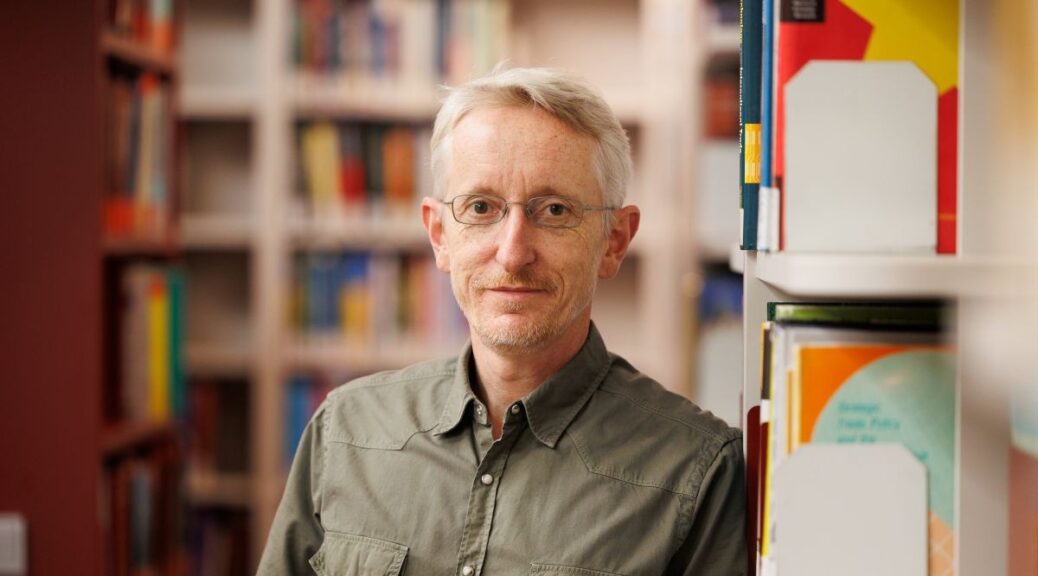
New Insights into the Impact of Emerging Technologies
Digital technologies, automation and artificial intelligence are reshaping how we learn, work and produce new knowledge. But how profound are these changes, and who is affected most? The Programme Jan Amos Comenius (OP JAK) research project “New Technologies and Transformations of Education, Research and the Labour Market,” led by Prof. Štěpán Jurajda of CERGE-EI, examines how technology is entering education, research and the economy, and how it is changing the skills people will need in the future. One of the project’s key questions is whether digital transformation may deepen existing gender inequalities—or create new ones—in access to technological skills and in the ways those skills are used. Continue reading New Insights into the Impact of Emerging Technologies

Migration, Refugees and Work: What Helps Integration?
In a new episode of Talking Economics, CERGE-EI Assistant Professor Achim Ahrens discusses what economic research tells us about migration, refugees and access to work in receiving countries. Speaking with host Katarina Stehlíková Štěpánková, Ahrens explains that the labour market effects of migration are highly context-dependent. While public debate often assumes that migration automatically lowers native wages or employment, empirical research points to a more nuanced picture. Continue reading Migration, Refugees and Work: What Helps Integration?
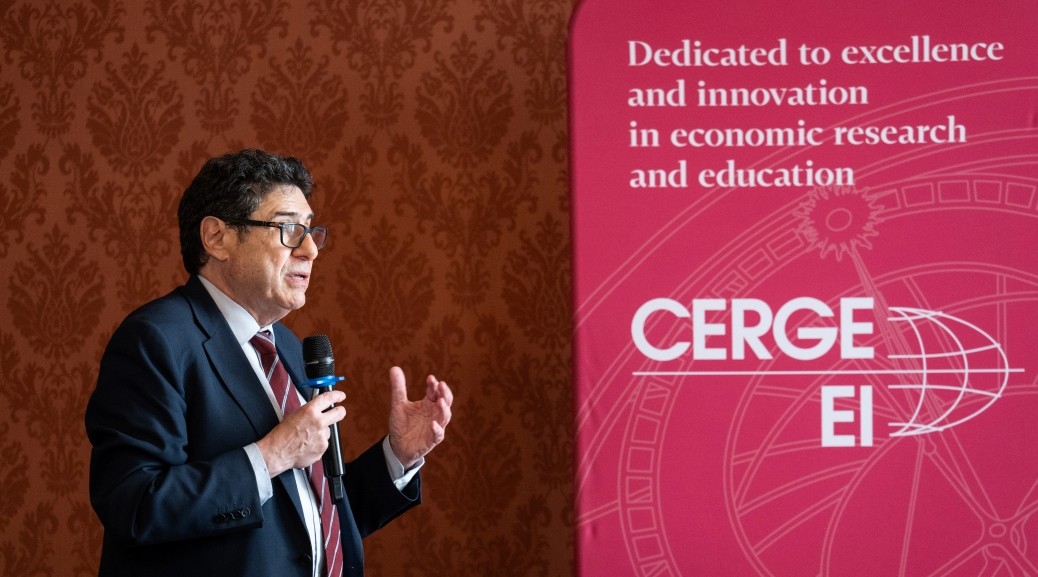
Philippe Aghion on Growth, Poverty, and Meaningful Research
CERGE-EI welcomed Nobel laureate Philippe Aghion as part of its Distinguished Speakers Series and on the occasion of the institution’s 35th anniversary. During his visit, Charles University awarded him the honorary degree of Doctor of Economic Sciences, honoris causa, and he delivered a public lecture titled The Power of Creative Destruction: Rethinking Capitalism. He also met with students, alumni, faculty, and decision makers for academic discussions and exchanges. In this student interview, Professor Aghion reflects on his own path from mathematics to economics, the social motivations behind his research, and the areas he believes will offer the most meaningful opportunities for young economists and PhD students today. Continue reading Philippe Aghion on Growth, Poverty, and Meaningful Research
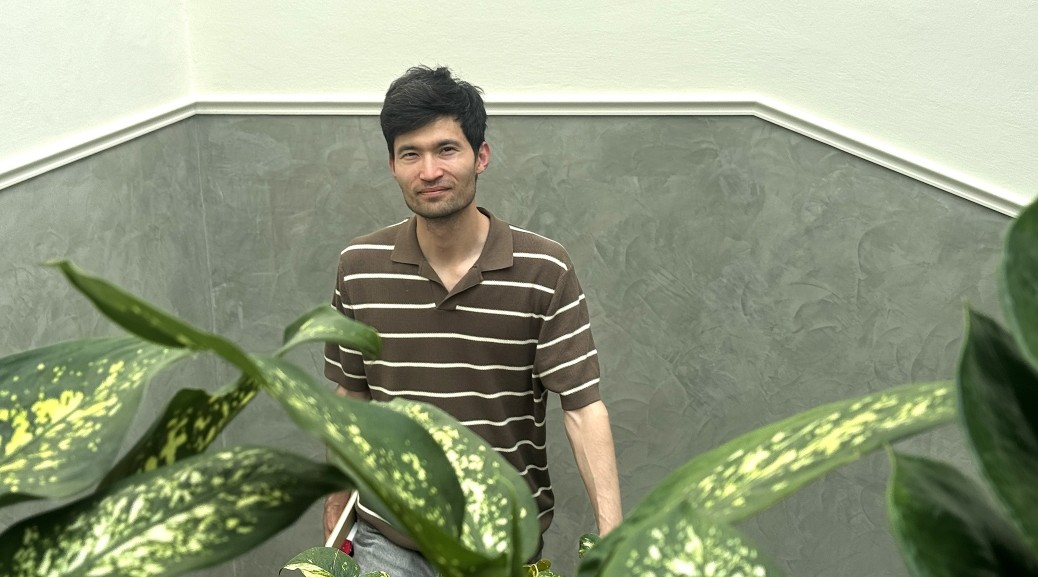
“A Huge Sea of Research”: Visiting CERGE-EI
Abylay Tursyn, a PhD student in economics at Narxoz University and a visiting student at CERGE-EI, combines economic research with a background in IT and data-driven system development. His work focuses on public procurement, particularly the behaviour and long-term sustainability of suppliers in electronic procurement markets. During his stay at CERGE-EI, he presented his research at a Brown Bag Seminar, examining why some suppliers remain active on Kazakhstan’s national e-procurement platform while others leave the market. Continue reading “A Huge Sea of Research”: Visiting CERGE-EI
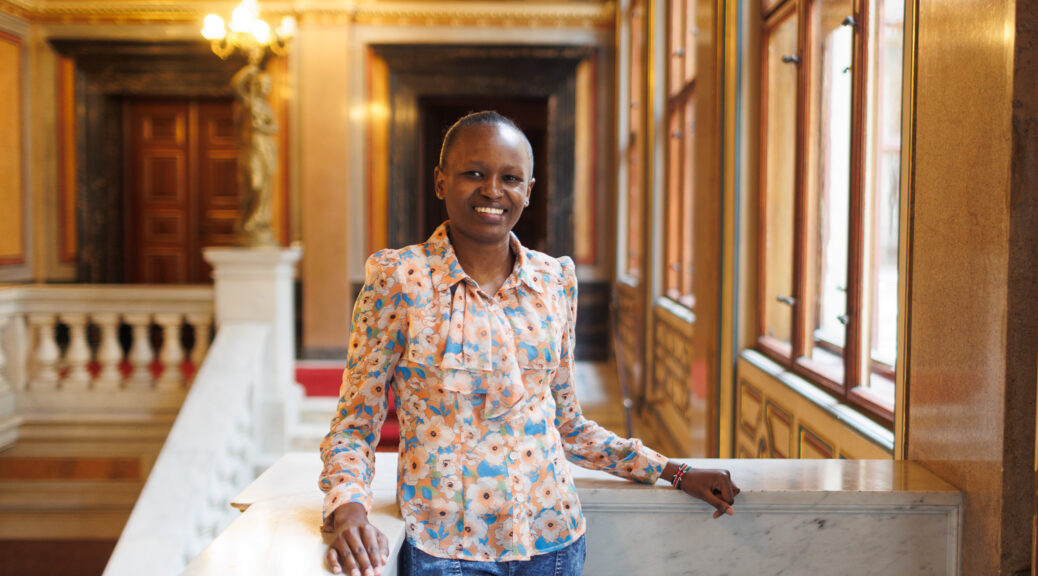
Finding Confidence and Community at UC Berkeley
As part of the Places You’ll Go series, CERGE-EI spoke with PhD student Winnie Njoroge about her research stay at UC Berkeley, where she joined a vibrant academic environment shaped by development seminars, Center for Effective Global Action (CEGA) meetings, research discussions, and exchanges with leading scholars. During her stay, she refined her job market paper, engaged with the broader U.S. academic community, and found that mobility can be both intellectually demanding and deeply encouraging. Continue reading Finding Confidence and Community at UC Berkeley