
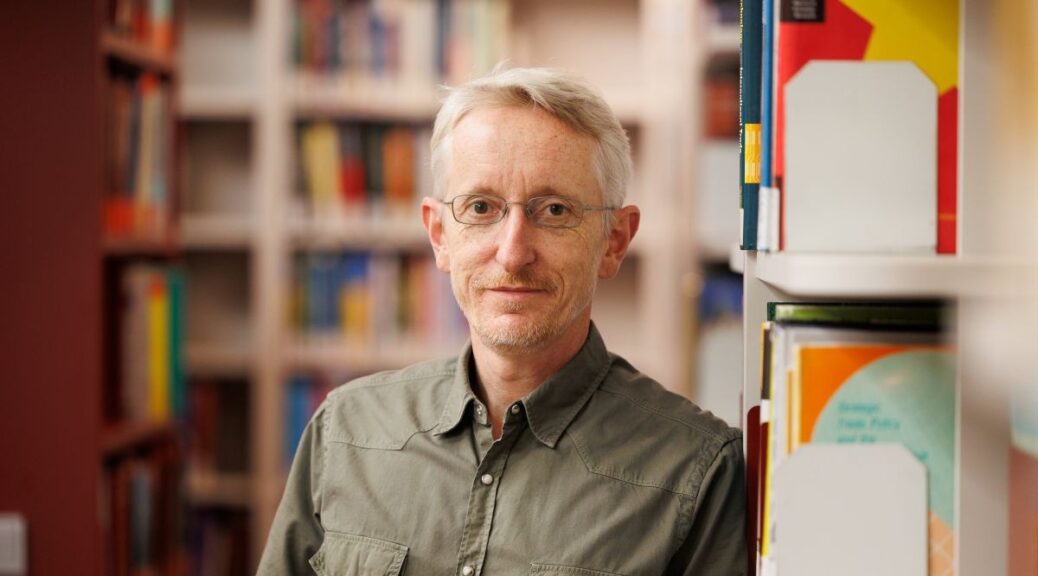
What will the future of money look like? How will digital currencies and new technologies reshape the way we pay and the institutions we rely on? And can regulations designed to make banks safer sometimes have the opposite effect? These are some of the questions explored by Maxi Guennewig, our new CERGE-EI faculty member. Previously a research economist at the European Central Bank, Maxi brings a fresh perspective on some of the most pressing challenges facing our financial systems.In this introductory interview, he shares what sparked his interest in the future of money, discusses surprising findings from his research, and reflects on his move to Prague. Continue reading Meet Maxi Guennewig: Rethinking the Future of Money
Category Archives: Faculty

New Insights into the Impact of Emerging Technologies
Digital technologies, automation and artificial intelligence are reshaping how we learn, work and produce new knowledge. But how profound are these changes, and who is affected most? The Programme Jan Amos Comenius (OP JAK) research project “New Technologies and Transformations of Education, Research and the Labour Market,” led by Prof. Štěpán Jurajda of CERGE-EI, examines how technology is entering education, research and the economy, and how it is changing the skills people will need in the future. One of the project’s key questions is whether digital transformation may deepen existing gender inequalities—or create new ones—in access to technological skills and in the ways those skills are used. Continue reading New Insights into the Impact of Emerging Technologies

Migration, Refugees and Work: What Helps Integration?
In a new episode of Talking Economics, CERGE-EI Assistant Professor Achim Ahrens discusses what economic research tells us about migration, refugees and access to work in receiving countries. Speaking with host Katarina Stehlíková Štěpánková, Ahrens explains that the labour market effects of migration are highly context-dependent. While public debate often assumes that migration automatically lowers native wages or employment, empirical research points to a more nuanced picture. Continue reading Migration, Refugees and Work: What Helps Integration?

Researching Migration Through Economics
How do migrants integrate, and what happens when policy does not just regulate but stigmatizes? In this interview, CERGE-EI’s new faculty member Teresa Freitas-Monteiro discusses her current research on migration, cultural backlash, administrative data, and why discriminatory policies can have effects far beyond economics. Continue reading Researching Migration Through Economics
Conclave Insider: Game Theory of Choosing a Pope
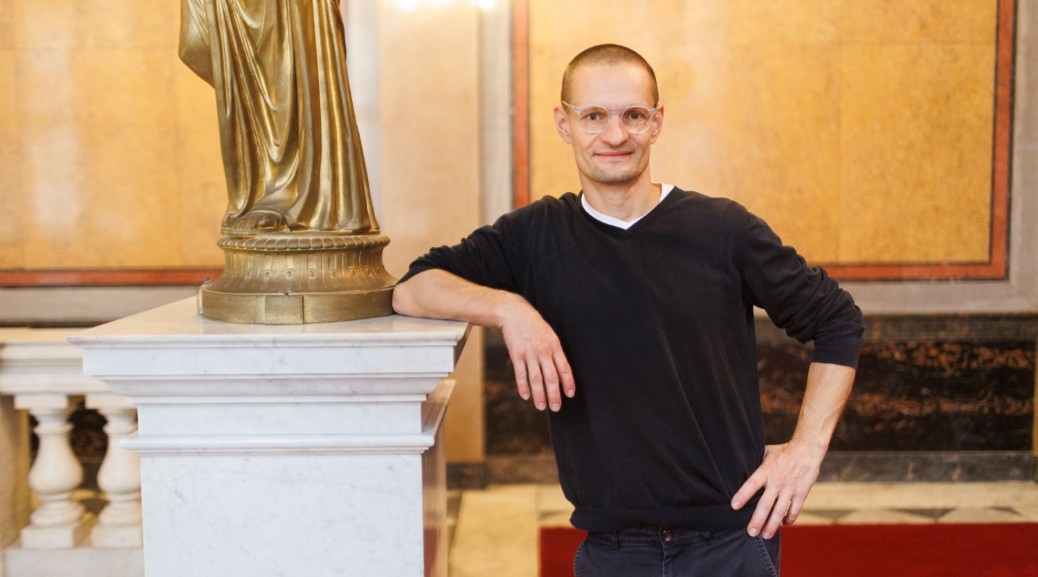
The papal conclave is often portrayed as a closed, ritualized event. But behind the secrecy lies a voting procedure with clear strategic logic. In this interview, CERGE-EI faculty Jan Zápal introduces the study Electing the pope: Elections by repeated ballots which he coauthors with Clara Ponsati. It explains how the pope is elected through repeated rounds requiring a two-thirds majority, why this system can in principle last for months or even years, and how economists model such elections to understand what kinds of winners the rules tend to produce. Along the way, they connect the conclave to other institutions that use similar repeated voting, and argue that long-standing rules can also confer legitimacy on the final choice. Continue reading Conclave Insider: Game Theory of Choosing a Pope

Who Pays for Policy? Find it out with Stephanie Ettmeier
Trained across disciplines and shaped by moments when economic policy moved from abstraction to real-world consequence, Stephanie Ettmeier, PhD, Assistant Professor at CERGE-EI, brings a distinctive perspective to contemporary macroeconomics. In this interview, she reflects on her unconventional path into the field, her motivation for joining CERGE-EI, and the questions that animate her research—from the effects of fiscal austerity to new methods for understanding how aggregate shocks are experienced across households, firms, and regions. Bridging historical insight with cutting-edge empirical tools, Ettmeier’s work highlights why looking beyond averages is essential for both economic research and policy today. Continue reading Who Pays for Policy? Find it out with Stephanie Ettmeier

Matching Matters: The Hidden Economics of Who Works Where with Luca Mazzone
In our latest Talking Economics episode, we spoke with Luca Mazzone, Assistant Professor at CERGE-EI and Economist at the IMF, about the hidden dynamics behind wage inequality, employment policy, and how households shape labor market outcomes. His research looks into how people and firms find each other—and why this matching process matters for productivity, inequality, and growth. Continue reading Matching Matters: The Hidden Economics of Who Works Where with Luca Mazzone

Pandemics’ Backlash: The Effects of the 1918 Influenza on Health Attitudes and Behavior. Interview with Christian Ochsner
What happens to public trust when a pandemic hits? Why do some people turn away from health authorities while others become more compliant? In the new CERGE-EI Working Paper titled Pandemics’ Backlash: The Effects of the 1918 Influenza on Health Attitudes and Behavior, Christian Ochsner, Assistant Professor at CERGE-EI, explores the long-term effects of pandemic mortality on public health-policy skepticism—using a surprising historical case: The Spanish flu pandemic. Continue reading Pandemics’ Backlash: The Effects of the 1918 Influenza on Health Attitudes and Behavior. Interview with Christian Ochsner

Talking Economics: Taxation, Wages, and Growth
In the latest episode of Talking Economics, we sat down with Ctirad Slavík, an Associate Professor with tenure at CERGE-EI, to discuss his research on taxation, the organization of knowledge and production, and the broader economic implications of policy reforms. Continue reading Talking Economics: Taxation, Wages, and Growth

Talking Economics: Labor Dynamics in Developing Countries
In the latest episode of Talking Economics, we discuss firms and labor markets in developing countries with Andreas Menzel, an Associate Professor with Tenure at CERGE-EI. Andreas’s research projects focus on development, organizational, and labor economics with field experiments in Ghana, Tanzania, or Bangladesh. Continue reading Talking Economics: Labor Dynamics in Developing Countries