
Policy effects can differ substantially across people, especially when individuals decide for themselves whether to participate. Recent CERGE-EI PhD graduate Maksim Smirnov, winner of this year’s Best Conference Paper Award at the Royal Economic Society Annual Conference 2026 for his paper Treatment effects identification and testing via reduced-form projections, develops new statistical methods for testing how the effects of policies differ across people, with practical applications for policy evaluation. His new statistical test shows how experiments with multiple levels of incentives can reveal whether treatment effects differ across otherwise unobserved groups, offering researchers a simple way to assess how far their findings may generalize. In the following text, Maksim Smirnov presents the key ideas behind his award-winning paper and explains their implications for policy analysis and design. Continue reading Designing Experiments for Better Policy
Category Archives: Research


Detecting Neurodegenerative Diseases Earlier: How Czech and Swiss Researchers Are Developing Remote Screening Tools
In this interview, Radim Boháček, PhD. (CERGE-EI) discusses a Czech-Swiss project developing smartphone-based tools for the early detection of neurodegenerative diseases as part of the neuroSHARE project, titled Remote Assessment of Neurodegenerative Diseases and Dementia. The broad collaboration includes members of the neuroSHARE research team — Vojtěch Illner, PhD., Pavla Mašková, Jan Rusz, PhD. from CTU FEL – Czech Technical University in Prague, Faculty of Electrical Engineering, and Petr Dušek, MD, PhD. from the First Faculty of Medicine, Charles University — as well as partners from Université de Lausanne (UNIL) and the Swiss Centre of Expertise in the Social Sciences (FORS). Continue reading Detecting Neurodegenerative Diseases Earlier: How Czech and Swiss Researchers Are Developing Remote Screening Tools

Finding an Academic Home in Prague: Šimon Trlifaj on His Visit to CERGE-EI
After several years abroad, PhD researcher Šimon Trlifaj returned to Prague with his family and joined CERGE-EI as a visiting student. In this interview, he reflects on the institution’s welcoming research culture, the value of interdisciplinary feedback, and how economic perspectives are shaping his work on public policy, science, and innovation. Continue reading Finding an Academic Home in Prague: Šimon Trlifaj on His Visit to CERGE-EI
New Insights into the Impact of Emerging Technologies
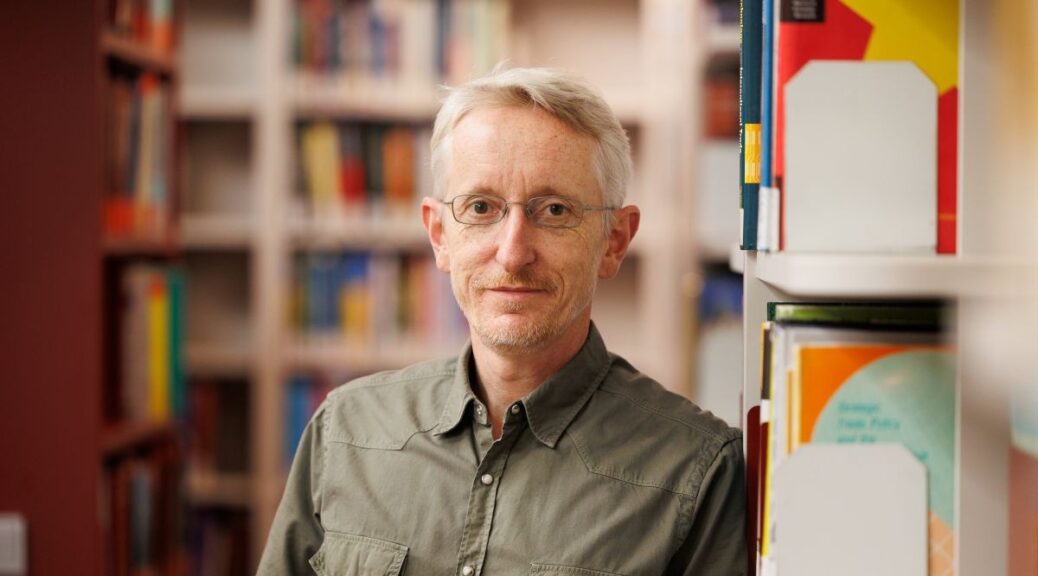
Digital technologies, automation and artificial intelligence are reshaping how we learn, work and produce new knowledge. But how profound are these changes, and who is affected most? The Programme Jan Amos Comenius (OP JAK) research project “New Technologies and Transformations of Education, Research and the Labour Market,” led by Prof. Štěpán Jurajda of CERGE-EI, examines how technology is entering education, research and the economy, and how it is changing the skills people will need in the future. One of the project’s key questions is whether digital transformation may deepen existing gender inequalities—or create new ones—in access to technological skills and in the ways those skills are used. Continue reading New Insights into the Impact of Emerging Technologies

Migration, Refugees and Work: What Helps Integration?
In a new episode of Talking Economics, CERGE-EI Assistant Professor Achim Ahrens discusses what economic research tells us about migration, refugees and access to work in receiving countries. Speaking with host Katarina Stehlíková Štěpánková, Ahrens explains that the labour market effects of migration are highly context-dependent. While public debate often assumes that migration automatically lowers native wages or employment, empirical research points to a more nuanced picture. Continue reading Migration, Refugees and Work: What Helps Integration?
Philippe Aghion on Growth, Poverty, and Meaningful Research
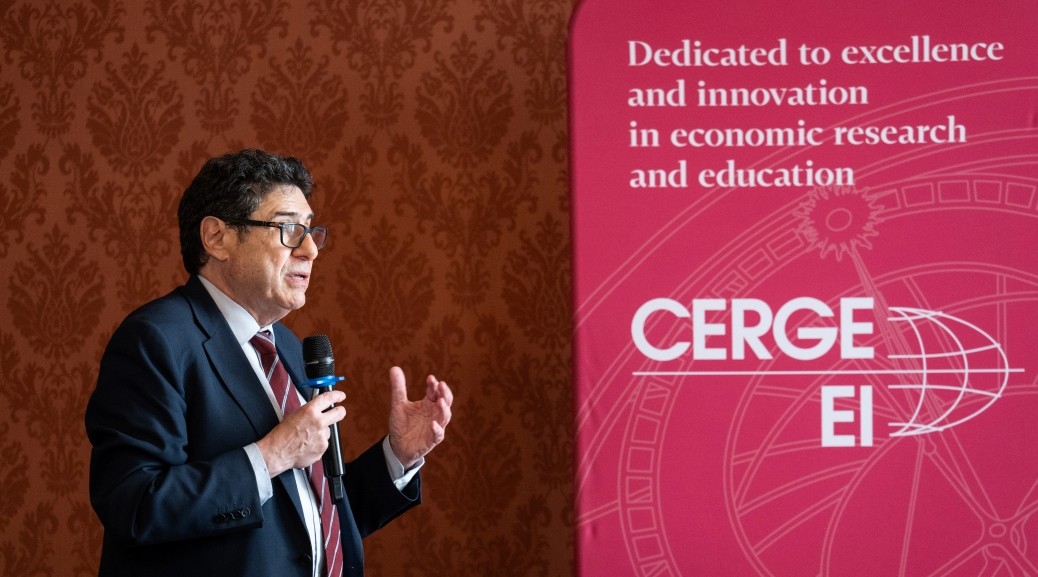
CERGE-EI welcomed Nobel laureate Philippe Aghion as part of its Distinguished Speakers Series and on the occasion of the institution’s 35th anniversary. During his visit, Charles University awarded him the honorary degree of Doctor of Economic Sciences, honoris causa, and he delivered a public lecture titled The Power of Creative Destruction: Rethinking Capitalism. He also met with students, alumni, faculty, and decision makers for academic discussions and exchanges. In this student interview, Professor Aghion reflects on his own path from mathematics to economics, the social motivations behind his research, and the areas he believes will offer the most meaningful opportunities for young economists and PhD students today. Continue reading Philippe Aghion on Growth, Poverty, and Meaningful Research

Researching Migration Through Economics
How do migrants integrate, and what happens when policy does not just regulate but stigmatizes? In this interview, CERGE-EI’s new faculty member Teresa Freitas-Monteiro discusses her current research on migration, cultural backlash, administrative data, and why discriminatory policies can have effects far beyond economics. Continue reading Researching Migration Through Economics

How Economic Shocks Shape Careers. Talking Economics Emerging Scholars with Margarita Pavlova
In the latest episode of Talking Economics Emerging Scholars, we speak with Margarita Pavlova, a CERGE-EI PhD candidate and an applied microeconomist specializing in labor and gender economics. Margarita studies how macroeconomic conditions, labor market policies, and institutional settings shape labor market outcomes over time. Continue reading How Economic Shocks Shape Careers. Talking Economics Emerging Scholars with Margarita Pavlova

When delayed retirement reshapes the workplace. Talking Economics Emerging Scholars with Sona Badalyan
Most research on retirement asks a simple question: when do people choose to stop working, and why? In the newest episode of Talking Economics Emerging Scholars, CERGE-EI job market candidate Sona Badalyan takes a different angle. She looks at raised retirement age as something that also happens to firms and coworkers—a change that can ripple through promotions, hiring, and peer effects. Continue reading When delayed retirement reshapes the workplace. Talking Economics Emerging Scholars with Sona Badalyan
Conclave Insider: Game Theory of Choosing a Pope
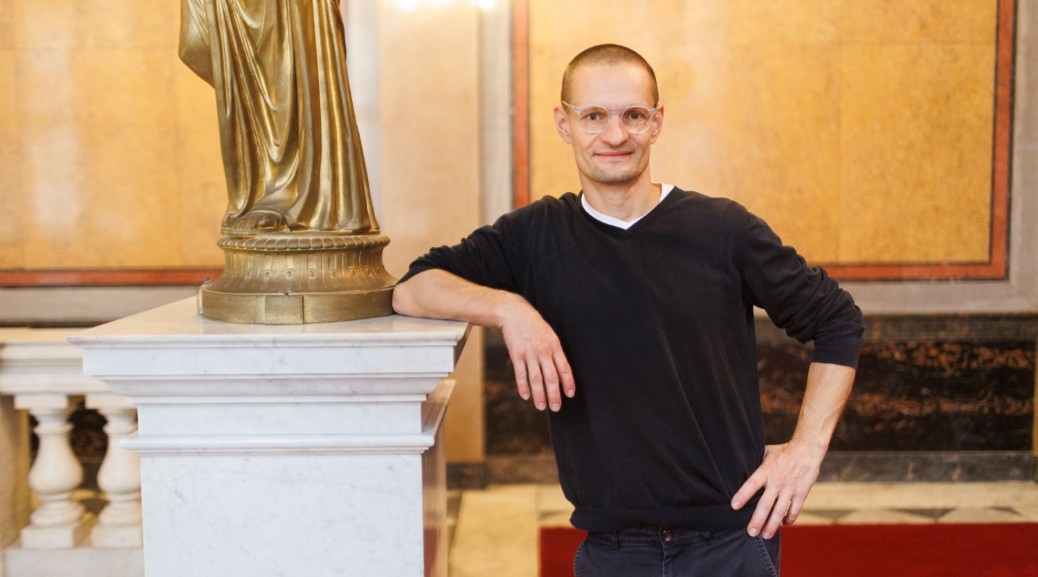
The papal conclave is often portrayed as a closed, ritualized event. But behind the secrecy lies a voting procedure with clear strategic logic. In this interview, CERGE-EI faculty Jan Zápal introduces the study Electing the pope: Elections by repeated ballots which he coauthors with Clara Ponsati. It explains how the pope is elected through repeated rounds requiring a two-thirds majority, why this system can in principle last for months or even years, and how economists model such elections to understand what kinds of winners the rules tend to produce. Along the way, they connect the conclave to other institutions that use similar repeated voting, and argue that long-standing rules can also confer legitimacy on the final choice. Continue reading Conclave Insider: Game Theory of Choosing a Pope