
In our Places You’ll Go series, we follow CERGE-EI students as they take their research abroad and bring new ideas back to Prague. In this interview, a CERGE-EI PhD student Ilisa Goenka (Quantitative Macroeconomics, Household Finance, Behavioral Macroeconomics) reflects on a high-intensity year filled with study stays at the University of Copenhagen (spring) and the University of Chicago (fall), with an additional visit to Princeton University as a Stapleton Scholar. In the interview she shares what it takes to integrate fast, stay productive, and make the most of short windows in top research environments.
Can you describe your last year? It was full of moving and setting in new places, since you were at the University of Copenhagen in the spring and at the University of Chicago in the fall (and you also spent time at Princeton University as a Stapleton Scholar).
If I think back on last year, what I remember most is how full it was. Spring was Copenhagen, fall was Chicago, and during my Chicago visit, I spent a week at Princeton. In between, I attended conferences and summer schools, so the year was consistently busy. There was a lot of organizing, and it took real effort to protect time and headspace for research.
At the same time, it was one of the most intellectually energizing periods of my PhD. Each place had a different style and a different way of talking about research, and that pushed me to see my work from new angles.
By the end of the year, I felt more confident about how I work. I got better at presenting my ideas, taking feedback seriously, and keeping momentum even when everything around me was changing. It was not the calmest year, but it was definitely a productive one.
Choosing destinations: start with research fit
How did you choose these destinations? What was the process like?
My choices were mainly driven by research fit. I work in macroeconomics with a focus on household finance, so I wanted to spend time in departments where a diverse group of people are thinking about closely related questions, and where I could get serious feedback on my work.
Copenhagen was the natural first step. The project I started during DPW was closely related to work being done there, so it made sense academically. I also wanted my first mobility stay to be in Europe. There are outstanding researchers here, and I think it can be a missed opportunity to focus only on the U.S. Copenhagen felt like the right mix of a strong research environment and practical closeness to Prague, which made it easier to start building this kind of experience.
“I learned to be less cautious… and to be braver about discussing work in progress.”
Chicago came from a slightly different motivation. As a macroeconomist, it really is one of the best places to be. By the time I was planning that visit, I wanted to focus on developing ideas for my job market paper, and I knew I would benefit from being in a department with a lot of faculty working across macro and household finance. Chicago offered exactly that breadth, including researchers not only in the Economics department but also in the business school.

The process also differed a lot across the two stays. Copenhagen was relatively informal, both in reaching out to a host and in arranging things within the department. Chicago was much more bureaucratic and took longer to plan, mainly because of paperwork and the visa process. I started preparing and applying for funding in the spring, so by the time I arrived in September it had been a long planning cycle.
Learning to Integrate in Copenhagen
Let’s focus on your research stay at the University of Copenhagen – what expectations did you have before arriving in Copenhagen, and which ones were challenged the most?
Before arriving in Copenhagen, I did not have very precise expectations because it was my first mobility stay. I assumed that once I was there, I would integrate into the department quite quickly. What challenged that expectation most was realizing that integration takes active effort. People are friendly and open, but you still have to show up, introduce yourself, and create those interactions.
A big part of that was personal. Being proactive did not come naturally to me at first. In the beginning I was a bit hesitant to take up people’s time or to bring up my ideas before they felt fully “ready.” Over the stay I learned to be less cautious about that, and to be braver about discussing work in progress.
“Honestly, these visits made my goals feel much more concrete.”
I was also positively surprised by how welcoming the department was. I did not know whether I would be taken seriously as a visiting PhD student, but I genuinely felt that people engaged with my work thoughtfully and treated me as part of the research community. That made a big difference for my confidence, and it is something I really appreciated about Copenhagen.

Was there anything about the university environment in Copenhagen that suited you personally better than at CERGE-EI, and why?
One thing I really loved about Copenhagen was the lunch culture. A lot of people ate around the same time, usually in the same place, so you kept seeing the same faces, and it really helped me integrate. It was an easy, low-pressure way to get to know people and feel part of the department, whether you ended up talking about research or just normal life. And in a subtle way, it helped my research too, because casual conversations often turned into useful feedback or new perspectives on what I was working on.
Seminars, workshops, and learning to present work in progress
Beyond your day-to-day research, what departmental or broader academic activities did you engage with during your visits?
I spent a lot of time in seminars and workshops in both Copenhagen and Chicago. At the University of Copenhagen, I regularly attended the weekly macro seminar and the PhD workshops. I also presented in a brown bag seminar, which was very valuable for the feedback. I had the opportunity to join a household finance reading group at Copenhagen Business School, where I was able to engage with the literature in a more structured way and got to present my own work.
Chicago had many more seminars throughout the week, including a student run macro workshop which was fascinating to attend. I also attended a macro reading group, which was a nice way to follow ongoing work and get exposed to new ideas in an informal setting. I presented in a macro workshop in front of faculty and students, and I left with very concrete comments and a long list of notes. While I was based in Chicago, I also presented at a conference in St. Louis, which was a great chance to get feedback from a broader audience.
Which new skills (both academic and personal) did you develop during your time in Denmark and U.S.?
Academically, I learned to structure ideas more clearly and to keep the bigger picture in view. Being in very active seminar and workshop environments forces you to explain what the question is, why it matters, and what the main mechanism is, without getting lost in details. Over time, I think I am getting better at asking the right questions early and giving my projects a clearer structure from the start.
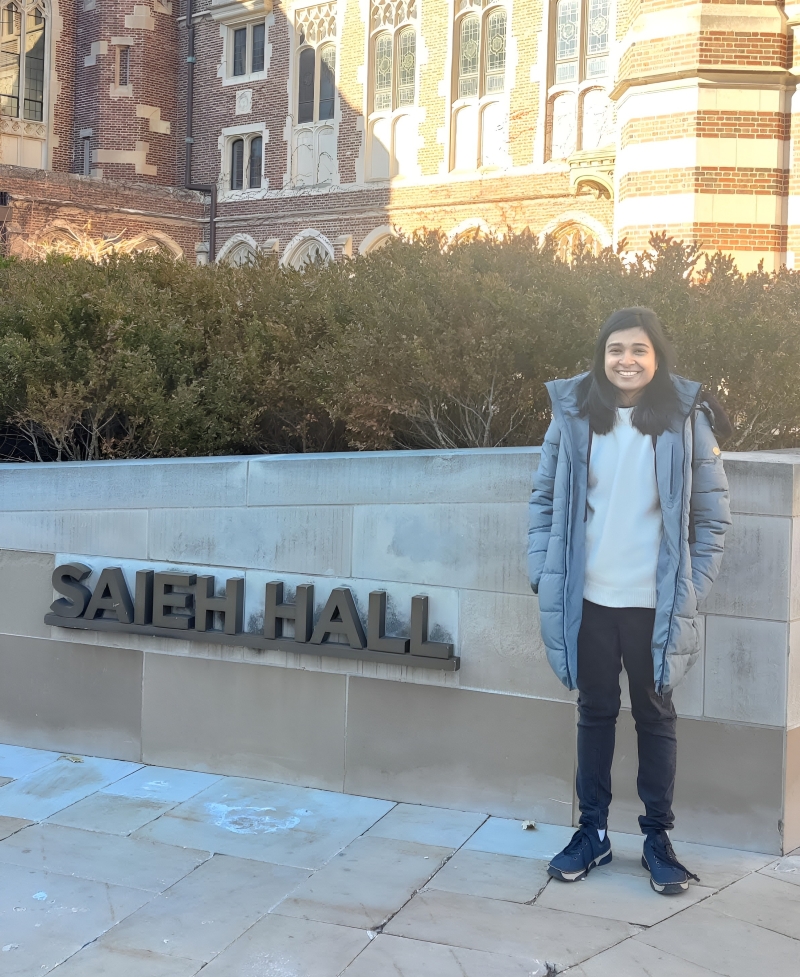
Personally, I learned to be more confident. At the start, I was genuinely nervous about approaching faculty, or even just walking up to people and talking about my work. The mobility stays helped me get over that, partly because I saw how normal and informal these interactions can be, and partly because they made me more aware that time is limited. If you are in a department for only a few months, you do not have the luxury of waiting until you feel perfectly ready. I learned to use the opportunity while I had it, and that has carried over into how I approach academic life more generally.
Chicago: scale, intensity, and job-market focus
How did your stay at University of Chicago complement your Copenhagen experience?
Copenhagen was the place where I learned how to settle into a new research environment while still moving my own work forward. I was exposed to many new ideas there through seminars, workshops, and informal conversations, and it broadened my perspective on the questions I work on.
Chicago complemented that mainly through scale. The department is larger, and there are simply many more seminars and workshops happening throughout the week, so daily life was busier. Doing Copenhagen earlier in the year helped as well, because by the time I arrived in Chicago I already had a better sense of how to approach a visit like this and could take advantage of the opportunities from the start.
Princeton as a Stapleton Scholar: concentrated conversations
You also spent time at Princeton University as a Stapleton Scholar. What did that involve, and how did it fit into your broader academic plans?
I spent about a week at Princeton as a Stapleton Scholar during my Chicago visit, and I am very grateful to have had that opportunity. I was also lucky to have people at Princeton who helped me arrange meetings with faculty and introduced me to PhD students, which made the visit feel smooth and welcoming from the start.
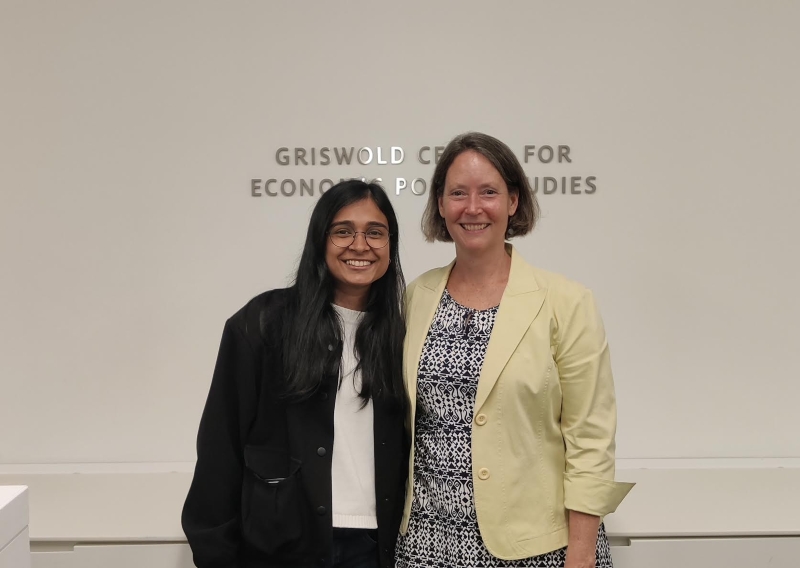
Even though it was short, I was able to attend several seminars and sit in on mock job talks, which was especially useful for seeing how job market candidates prepare in leading departments. I also planned the timing so that I would be there during a macro-finance conference, which meant I could interact not only with Princeton faculty, but also with visiting faculty from places like Stanford and NYU.
“My main advice is not to wait for the moment when you feel completely ready.”
One memorable part of the week was meeting Jakub Kastl, who is on the CERGE-EI Foundation Board. We had a really interesting conversation not only about research, but also about CERGE-EI itself, and how research culture can differ across institutions. It made me reflect on what CERGE-EI does particularly well, and on which practices from abroad could be useful to bring back.
In terms of my broader academic plans, the Princeton week came very early in my mobility, and it helped set the tone for the rest of the fall. Having many conversations concentrated into a few days pushed me to articulate ideas quickly and helped me start developing directions for my job market paper earlier than I otherwise would have.
Building Confidence Through Academic Mobility
How did these experiences (Copenhagen, Chicago, and Princeton) influence your future academic or career goals?
Honestly, these visits made my goals feel much more concrete. Being in Copenhagen, Chicago, and Princeton helped me see more clearly what kind of environment I thrive in, and what kind of economist I want to become. Maybe most importantly, it reminded me how much progress comes from being part of active research communities, so I now see staying connected to these networks as a central part of my plan. Overall, the year reinforced that academia is where I want to be.
What advice would you give to younger CERGE-EI students who are considering where to apply for a study stay?
My main advice is not to wait for the moment when you feel completely ready, because that moment rarely comes. When choosing where to apply, start with research fit. Look for departments where there are several people working close to your interests, and where you can imagine presenting your work and getting feedback that is directly relevant. CERGE-EI makes these stays much more feasible than many places do, so it is worth taking advantage of the support. And once you are there, do not be hesitant. Reach out to people, go to seminars, ask for meetings, and take it seriously. You are only there for a short time, so it is worth making the most of it. If you are unsure where to start, ask faculty at CERGE-EI for advice early on. In my experience, they are very supportive and can really help make these visits happen.
