
Policy effects can differ substantially across people, especially when individuals decide for themselves whether to participate. Recent CERGE-EI PhD graduate Maksim Smirnov, winner of this year’s Best Conference Paper Award at the Royal Economic Society Annual Conference 2026 for his paper Treatment effects identification and testing via reduced-form projections, develops new statistical methods for testing how the effects of policies differ across people, with practical applications for policy evaluation. His new statistical test shows how experiments with multiple levels of incentives can reveal whether treatment effects differ across otherwise unobserved groups, offering researchers a simple way to assess how far their findings may generalize. In the following text, Maksim Smirnov presents the key ideas behind his award-winning paper and explains their implications for policy analysis and design. Continue reading Designing Experiments for Better Policy
Category Archives: PhD


Finding an Academic Home in Prague: Šimon Trlifaj on His Visit to CERGE-EI
After several years abroad, PhD researcher Šimon Trlifaj returned to Prague with his family and joined CERGE-EI as a visiting student. In this interview, he reflects on the institution’s welcoming research culture, the value of interdisciplinary feedback, and how economic perspectives are shaping his work on public policy, science, and innovation. Continue reading Finding an Academic Home in Prague: Šimon Trlifaj on His Visit to CERGE-EI
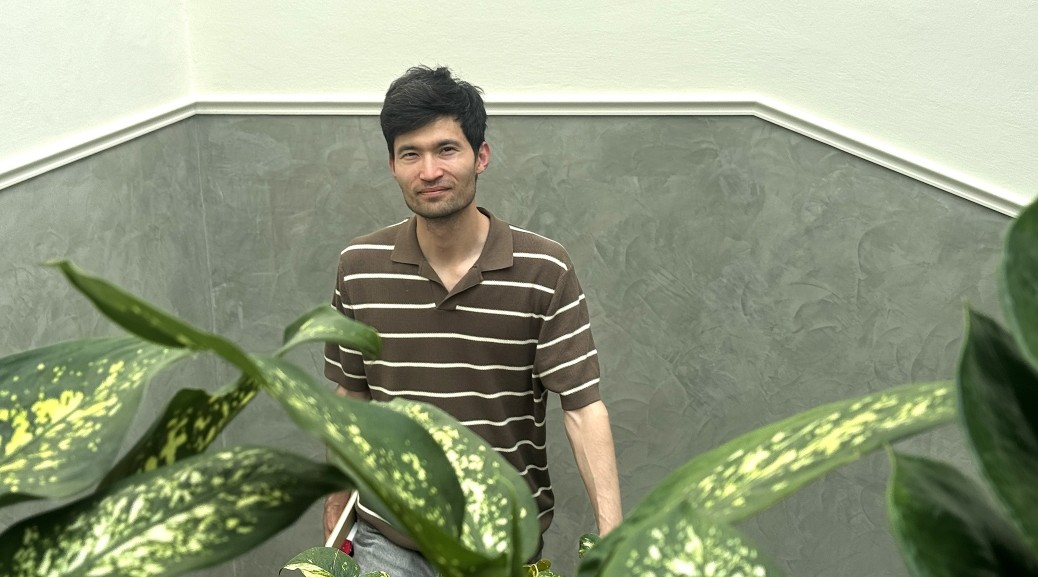
“A Huge Sea of Research”: Visiting CERGE-EI
Abylay Tursyn, a PhD student in economics at Narxoz University and a visiting student at CERGE-EI, combines economic research with a background in IT and data-driven system development. His work focuses on public procurement, particularly the behaviour and long-term sustainability of suppliers in electronic procurement markets. During his stay at CERGE-EI, he presented his research at a Brown Bag Seminar, examining why some suppliers remain active on Kazakhstan’s national e-procurement platform while others leave the market. Continue reading “A Huge Sea of Research”: Visiting CERGE-EI
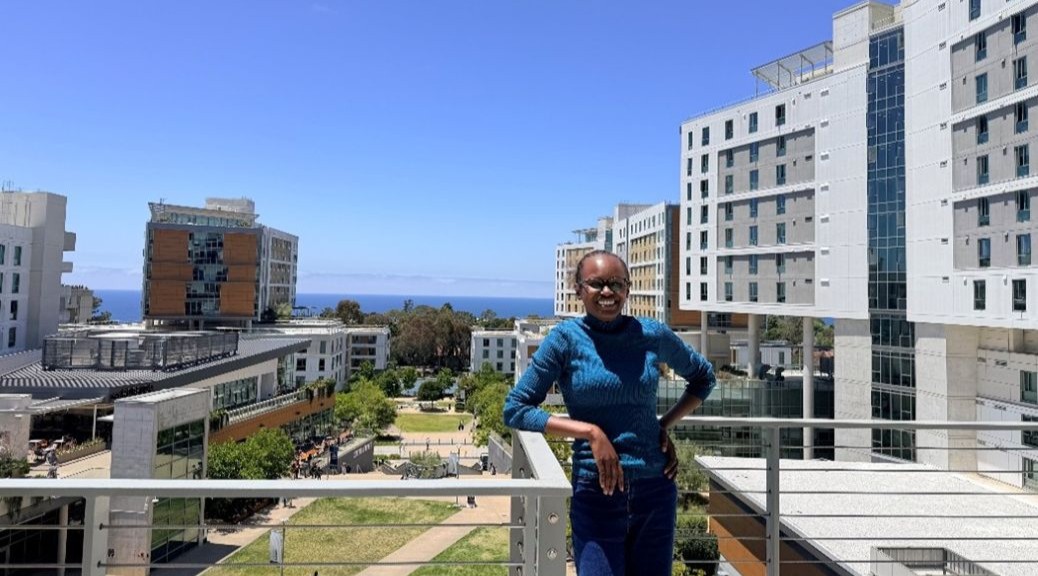
Finding Confidence and Community at UC Berkeley
As part of the Places You’ll Go series, CERGE-EI spoke with PhD student Winnie Njoroge about her research stay at UC Berkeley, where she joined a vibrant academic environment shaped by development seminars, Center for Effective Global Action (CEGA) meetings, research discussions, and exchanges with leading scholars. During her stay, she refined her job market paper, engaged with the broader U.S. academic community, and found that mobility can be both intellectually demanding and deeply encouraging. Continue reading Finding Confidence and Community at UC Berkeley

How Economic Shocks Shape Careers. Talking Economics Emerging Scholars with Margarita Pavlova
In the latest episode of Talking Economics Emerging Scholars, we speak with Margarita Pavlova, a CERGE-EI PhD candidate and an applied microeconomist specializing in labor and gender economics. Margarita studies how macroeconomic conditions, labor market policies, and institutional settings shape labor market outcomes over time. Continue reading How Economic Shocks Shape Careers. Talking Economics Emerging Scholars with Margarita Pavlova

At the Harris School: A Research Stay at the Frontier of Political Economy
As part of our Places You’ll Go series, we spoke with Vladimir Shchukin a CERGE-EI student about his research stay at the University of Chicago Harris School of Public Policy, one of the leading centers for political economy. In this interview, Vladimir reflects on how he chose his destination, what he gained from presenting his work in a new academic environment, and how discussions with leading scholars and fellow students helped sharpen his research interests and strengthen his motivation to pursue an academic career. Continue reading At the Harris School: A Research Stay at the Frontier of Political Economy

Research, Risk, and Growth: My Time at Yale
As part of the Places You’ll Go series, this interview with Margarita Pavlova follows a CERGE-EI student’s research stay at Yale University — a journey shaped by academic ambition, unexpected confidence, and the search for the right intellectual environment. What began as a strategic step to advance a Job Market Paper became a much broader experience of growth: from engaging with leading scholars in labor economics to discovering that top academic spaces are not only demanding, but also deeply energizing. In this conversation, she reflects on choosing Yale, navigating the road to the US, and what the experience taught her about research, collaboration, and believing in her own ideas. Continue reading Research, Risk, and Growth: My Time at Yale
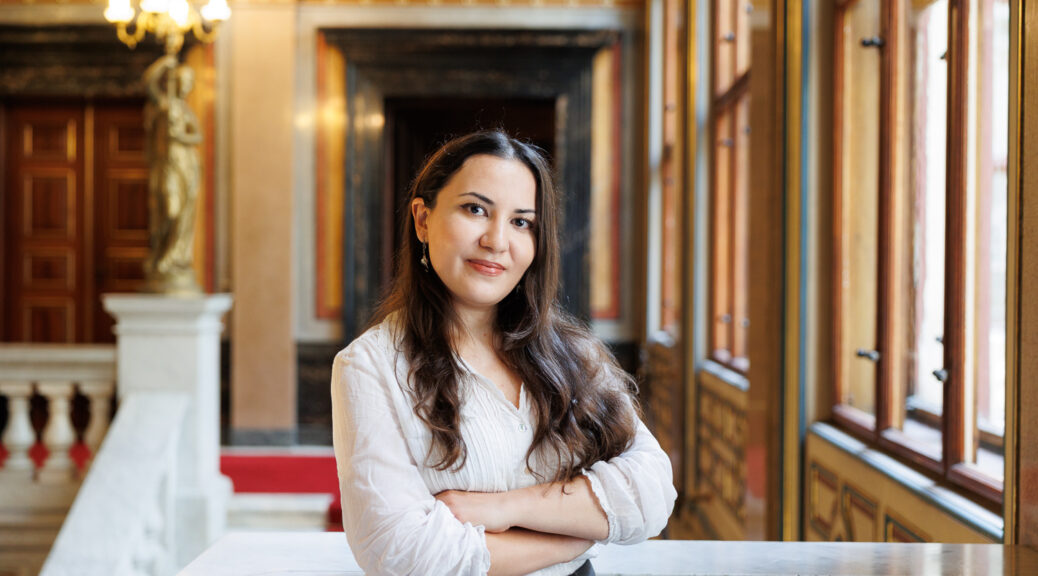
When delayed retirement reshapes the workplace. Talking Economics Emerging Scholars with Sona Badalyan
Most research on retirement asks a simple question: when do people choose to stop working, and why? In the newest episode of Talking Economics Emerging Scholars, CERGE-EI job market candidate Sona Badalyan takes a different angle. She looks at raised retirement age as something that also happens to firms and coworkers—a change that can ripple through promotions, hiring, and peer effects. Continue reading When delayed retirement reshapes the workplace. Talking Economics Emerging Scholars with Sona Badalyan

From Copenhagen to Chicago—A PhD Year on the Move
In our Places You’ll Go series, we follow CERGE-EI students as they take their research abroad and bring new ideas back to Prague. In this interview, a CERGE-EI PhD student Ilisa Goenka (Quantitative Macroeconomics, Household Finance, Behavioral Macroeconomics) reflects on a high-intensity year filled with study stays at the University of Copenhagen (spring) and the University of Chicago (fall), with an additional visit to Princeton University as a Stapleton Scholar. In the interview she shares what it takes to integrate fast, stay productive, and make the most of short windows in top research environments. Continue reading From Copenhagen to Chicago—A PhD Year on the Move

Boston Bound: Study Stay at MIT
In this entry of the Places You’ll Go series, we follow Maksim Smirnov, a CERGE-EI PhD student, to MIT for a spring research stay shaped by one goal: sharpening a job market paper in the right intellectual home. Drawn by MIT’s strength in instrumental variable models and an unusually welcoming econometrics community, the visit became both a research accelerant and a crash course in academic connection. Continue reading Boston Bound: Study Stay at MIT