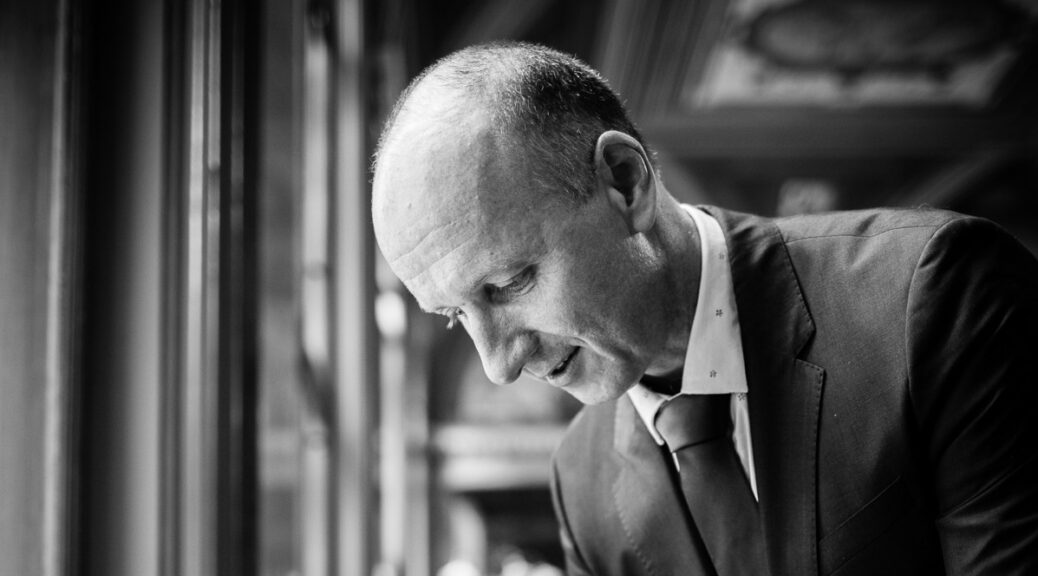
Our Phd alumnus, Viliam Druska, is Senior Director of Regulatory Economics at Ooredoo in Doha, Qatar. After starting out in a technical field, he transitioned to economics during the region’s shift to a market economy and went on to build a career in telecommunications. In this interview, Viliam shares the key choices behind his journey, explains what regulatory economics looks like in practice, and reflects on why balancing short- and long-term incentives matters for investment. Continue reading Meet Our Alumni: Regulation, Competition, and the Digital Economy
Category Archives: PhD

From Prague to Chicago to Princeton, via the New York Fed
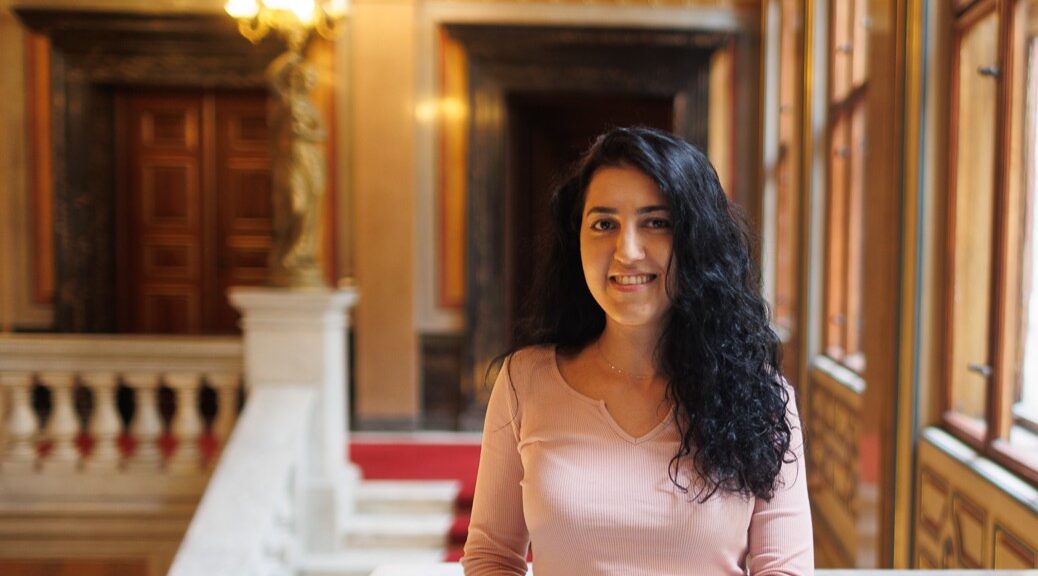
What starts as a single email can turn into a research-shaping journey. As Gayane Baghumyan, a PhD student and aspiring experimental economist at CERGE-EI, describes in this Places You’ll Go interview, it unfolded like this: a CERGE-EI–supported research stay became six months at the University of Chicago, hosted by John List, followed by a Stapleton Award–funded visit to Princeton and a conference stop at the New York Fed. Along the way, she discovered an intense seminar culture, world-class faculty who were unexpectedly down-to-earth, and “random conversations” that sharpened her research design and broadened her view of how economics can influence the world. Continue reading From Prague to Chicago to Princeton, via the New York Fed

Intangibles, Innovation, and Competition: A Conversation With the Econometric Society Best Paper Awardee
In this interview, the recent AMES-CSW Best Paper Award 2026 recipient Cagin Keskin discusses the ideas behind his award-winning research, which explores how firms’ diversification decisions shape innovation, competition, and long-term economic growth. He reflects on the methodological innovations that made the project possible, the policy questions it helps answer, and how this work fits into his broader research agenda on the role of intangibles and firm heterogeneity in modern economies. Continue reading Intangibles, Innovation, and Competition: A Conversation With the Econometric Society Best Paper Awardee

“A New Door Opened”: Yaroslav Korobka’s Journey Through Academic Mobility
When Yaroslav Korobka, a CERGE-EI student with a deep passion for econometrics, received the unexpected suggestion “Princeton” during his DPW defense, it opened a path he hadn’t fully imagined. His mobility stay at Princeton University became a defining academic experience—shaping his research, expanding his network, and transforming both his skills and perspective. In this interview from the series Places You’ll Go, he shares what surprised him most about the teaching environment and the lessons he brought back for future CERGE-EI students. Continue reading “A New Door Opened”: Yaroslav Korobka’s Journey Through Academic Mobility

Confidence, Curiosity, and California: Reflections on a Study Stay
From Prague to Berkeley, this interview traces the academic and personal journey of our PhD student Tereza Burýšková, who spent a study stay
at the University of California, Berkeley. Her experiences open a new interview series titled Places You’ll Go, sharing reflections on the decision-making process, cultural adjustments, and differences in academic environments. The interview aims to encourage other students to take a similar step. It offers an honest look at what it means to move beyond one’s comfort zone. Continue reading Confidence, Curiosity, and California: Reflections on a Study Stay

Understanding Discrimination Through the Lens of Behavioral Economics
Discrimination, as defined in economics, occurs when two otherwise identical individuals or groups are treated differently based solely on a group attribute. In economic terms, discrimination leads to real losses in productivity and efficiency. When talent is overlooked, firms lose potential profit, and society wastes valuable human capital. In our latest episode of Talking Economics, Vojtěch Bartoš, Associate Professor at the University of Milan and CERGE-EI alumnus, explains how behavioral economics helps uncover the mechanisms behind bias — and how evidence-based tools can help reduce it. Continue reading Understanding Discrimination Through the Lens of Behavioral Economics

Meet Our Alumni: Linking Information, Behavior, and the Environment
What comes after a PhD? Our alumnus, Rastislav Rehák, reflects on his postdoctoral journey at the Max Planck Institute for Research on Collective Goods and the University of Cologne, where he explores new directions in behavioral and environmental economics, as well as the passion that keeps him balanced outside of academia. Continue reading Meet Our Alumni: Linking Information, Behavior, and the Environment

Meet Our Students: Sook Yan Siew
Sook Yan Siew shares her experiences as a PhD in Economics student at CERGE-EI and her role as an international student ambassador at Charles University. Looking ahead, she is considering a future in academia while also running her own NGO. She believes this path will allow her to balance her passion for long-term theoretical research with short-term practical work. Continue reading Meet Our Students: Sook Yan Siew

Meet Our Students: Raul Enrique Zavala Sanchez
In this short interview, Raul Enrique Zavala Sanchez shares his experience as a PhD in Economics student at CERGE-EI. Originally from Central America, he holds a Bachelor’s degree in Business Administration from a university in Vilnius, Lithuania, and later earned a Master’s degree in Finance. His interest in macroeconomics grew from a desire to understand the economic challenges of his home region. After discovering CERGE-EI, he moved to Prague to pursue his goal of conducting economic research. Looking ahead, he is considering a future in academia or a research-oriented role at an international organization such as the IMF or the World Bank. Continue reading Meet Our Students: Raul Enrique Zavala Sanchez

Meet Our Students: Sofiana Sinani’s paper won the Best Poster Prize at the Royal Economic Society Conference
What if parental leave policies shape more than just short-term labor outcomes? While much of the existing research focuses on how such policies impact parents’ careers, Sofiana Sinani, winner of the Best Poster Prize at the Royal Economic Society Conference 2025, took a different angle: How do extended periods of maternal care influence children’s future aspirations — especially their choice of university studies and careers? Her project examines a 1995 policy change in the Czech Republic, where mothers were offered the option to extend their leave beyond the standard job-protection period. The results are following: boys exposed to longer maternal care were significantly less likely to apply to stereotypically “female” fields, such as education or healthcare. The research suggests that parental leave doesn’t just affect today’s workforce — it can shape the beliefs and ambitions of the next generation. In this interview, we explore the project that earned Sofiana Sinani the Best Poster Prize at the Royal Economic Society Conference 2025.