
In this entry of the Places You’ll Go series, we follow Maksim Smirnov, a CERGE-EI PhD student, to MIT for a spring research stay shaped by one goal: sharpening a job market paper in the right intellectual home. Drawn by MIT’s strength in instrumental variable models and an unusually welcoming econometrics community, the visit became both a research accelerant and a crash course in academic connection. Continue reading Boston Bound: Study Stay at MIT
Tag Archives: Economics

Meet Our Alumni: Regulation, Competition, and the Digital Economy
Our Phd alumnus, Viliam Druska, is Senior Director of Regulatory Economics at Ooredoo in Doha, Qatar. After starting out in a technical field, he transitioned to economics during the region’s shift to a market economy and went on to build a career in telecommunications. In this interview, Viliam shares the key choices behind his journey, explains what regulatory economics looks like in practice, and reflects on why balancing short- and long-term incentives matters for investment. Continue reading Meet Our Alumni: Regulation, Competition, and the Digital Economy
Conclave Insider: Game Theory of Choosing a Pope
The papal conclave is often portrayed as a closed, ritualized event. But behind the secrecy lies a voting procedure with clear strategic logic. In this interview, CERGE-EI faculty Jan Zápal introduces the study Electing the pope: Elections by repeated ballots which he coauthors with Clara Ponsati. It explains how the pope is elected through repeated rounds requiring a two-thirds majority, why this system can in principle last for months or even years, and how economists model such elections to understand what kinds of winners the rules tend to produce. Along the way, they connect the conclave to other institutions that use similar repeated voting, and argue that long-standing rules can also confer legitimacy on the final choice. Continue reading Conclave Insider: Game Theory of Choosing a Pope
From Prague to Chicago to Princeton, via the New York Fed
What starts as a single email can turn into a research-shaping journey. As Gayane Baghumyan, a PhD student and aspiring experimental economist at CERGE-EI, describes in this Places You’ll Go interview, it unfolded like this: a CERGE-EI–supported research stay became six months at the University of Chicago, hosted by John List, followed by a Stapleton Award–funded visit to Princeton and a conference stop at the New York Fed. Along the way, she discovered an intense seminar culture, world-class faculty who were unexpectedly down-to-earth, and “random conversations” that sharpened her research design and broadened her view of how economics can influence the world. Continue reading From Prague to Chicago to Princeton, via the New York Fed
“A New Door Opened”: Yaroslav Korobka’s Journey Through Academic Mobility
When Yaroslav Korobka, a CERGE-EI student with a deep passion for econometrics, received the unexpected suggestion “Princeton” during his DPW defense, it opened a path he hadn’t fully imagined. His mobility stay at Princeton University became a defining academic experience—shaping his research, expanding his network, and transforming both his skills and perspective. In this interview from the series Places You’ll Go, he shares what surprised him most about the teaching environment and the lessons he brought back for future CERGE-EI students. Continue reading “A New Door Opened”: Yaroslav Korobka’s Journey Through Academic Mobility

Confidence, Curiosity, and California: Reflections on a Study Stay
From Prague to Berkeley, this interview traces the academic and personal journey of our PhD student Tereza Burýšková, who spent a study stay
at the University of California, Berkeley. Her experiences open a new interview series titled Places You’ll Go, sharing reflections on the decision-making process, cultural adjustments, and differences in academic environments. The interview aims to encourage other students to take a similar step. It offers an honest look at what it means to move beyond one’s comfort zone. Continue reading Confidence, Curiosity, and California: Reflections on a Study Stay
Who Pays for Policy? Find it out with Stephanie Ettmeier
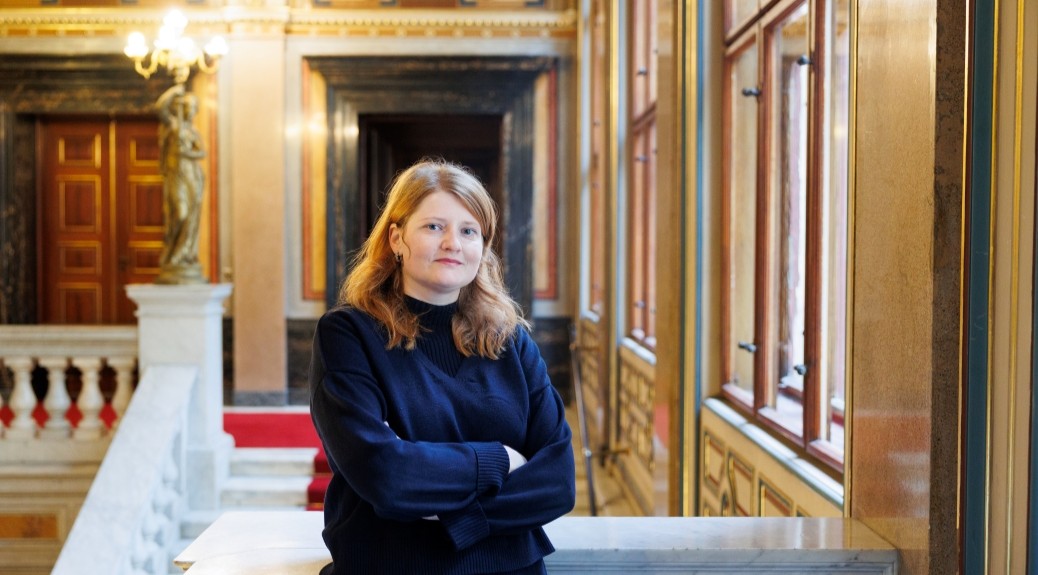
Trained across disciplines and shaped by moments when economic policy moved from abstraction to real-world consequence, Stephanie Ettmeier, PhD, Assistant Professor at CERGE-EI, brings a distinctive perspective to contemporary macroeconomics. In this interview, she reflects on her unconventional path into the field, her motivation for joining CERGE-EI, and the questions that animate her research—from the effects of fiscal austerity to new methods for understanding how aggregate shocks are experienced across households, firms, and regions. Bridging historical insight with cutting-edge empirical tools, Ettmeier’s work highlights why looking beyond averages is essential for both economic research and policy today. Continue reading Who Pays for Policy? Find it out with Stephanie Ettmeier

Meet Our Students: Sook Yan Siew
Sook Yan Siew shares her experiences as a PhD in Economics student at CERGE-EI and her role as an international student ambassador at Charles University. Looking ahead, she is considering a future in academia while also running her own NGO. She believes this path will allow her to balance her passion for long-term theoretical research with short-term practical work. Continue reading Meet Our Students: Sook Yan Siew
Silvester van Koten: We Need to Address the Shortage of Oil and Gas
Russia’s invasion of Ukraine has boosted the already high prices of oil and gas in the European Union. How come the energy situation in the EU is so dependent on Russia? What are the prognoses for energy costs and related costs of living for the near future? In Talking Economics, Katarína Stehlíková chats with Silvester van Koten, a CERGE-EI PhD in Economics alumnus, about War on Ukraine’s effect on European energy. Continue reading Silvester van Koten: We Need to Address the Shortage of Oil and Gas
Meet Our Alumni: My current research investigates behavior of firms during epidemic, says Vahagn Jerbashian
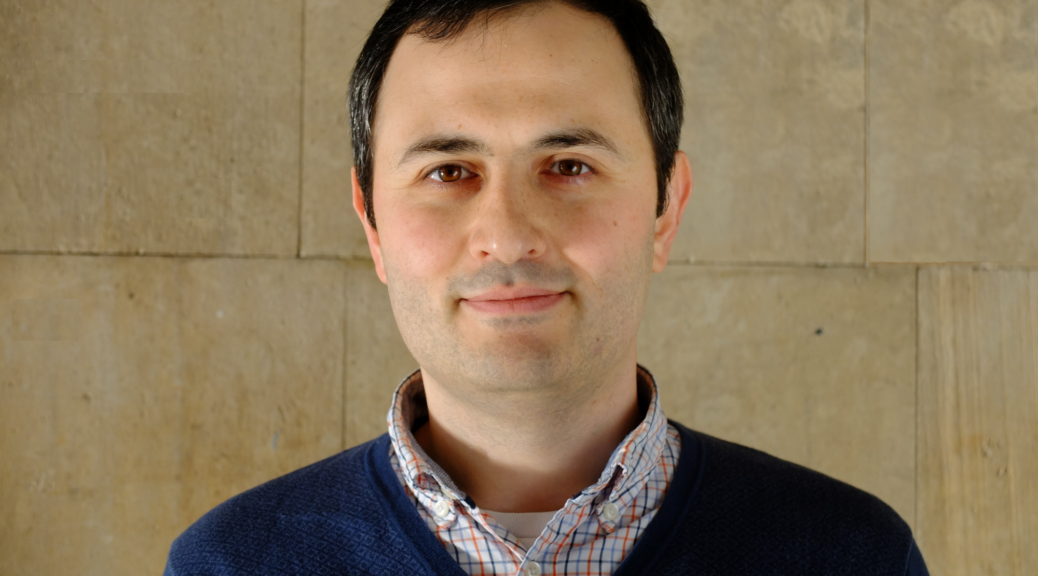
Vahagn Jerbashian, our graduate on the PhD in Economics program, has been working as an Assistant Professor at the University of Barcelona since 2013. In this interview, he shares his journey from theoretical mathematics to economics, his current research interests that lie in technological change and innovation, competition, human capital accumulation, and economic growth; and his activities for the Armenian Economic Association.