As part of the Places You’ll Go series, CERGE-EI spoke with PhD student Winnie Njoroge about her research stay at UC Berkeley, where she joined a vibrant academic environment shaped by development seminars, Center for Effective Global Action (CEGA) meetings, research discussions, and exchanges with leading scholars. During her stay, she refined her job market paper, engaged with the broader U.S. academic community, and found that mobility can be both intellectually demanding and deeply encouraging.
What did your typical week at Berkeley look like?
There were a lot of activities going on in Berkeley, and sometimes the challenge was choosing what to attend and being okay with missing the rest. A rhythm that worked for me was dedicating mornings to meetings whenever possible, afternoons were for attending seminars and development economics class, and in the evenings, I would reflect on the feedback, read suggested papers, and basically work on my research.
“There were a lot of activities going on in Berkeley, and sometimes the challenge was choosing what to attend and being okay with missing the rest.”
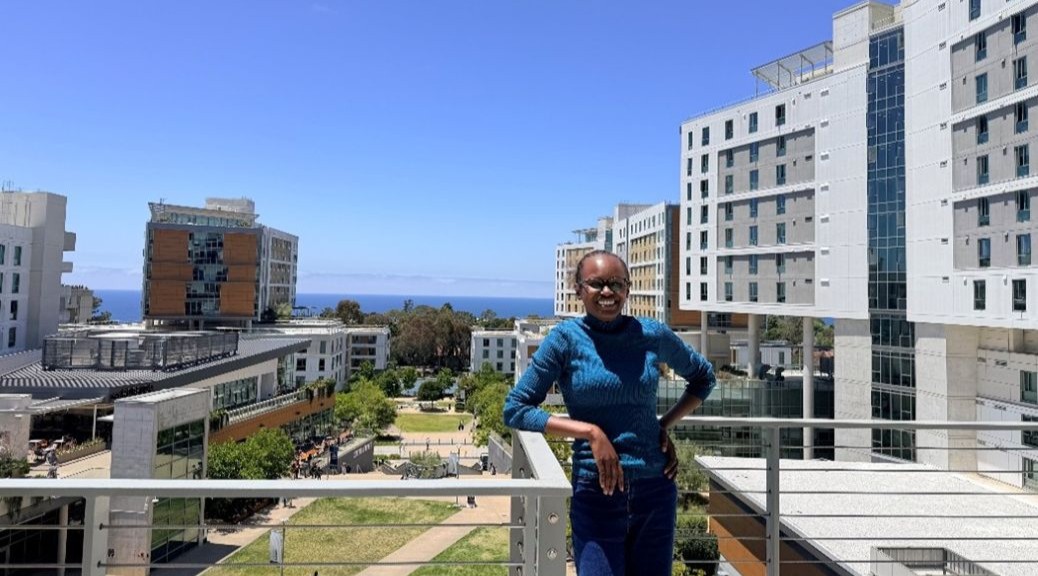
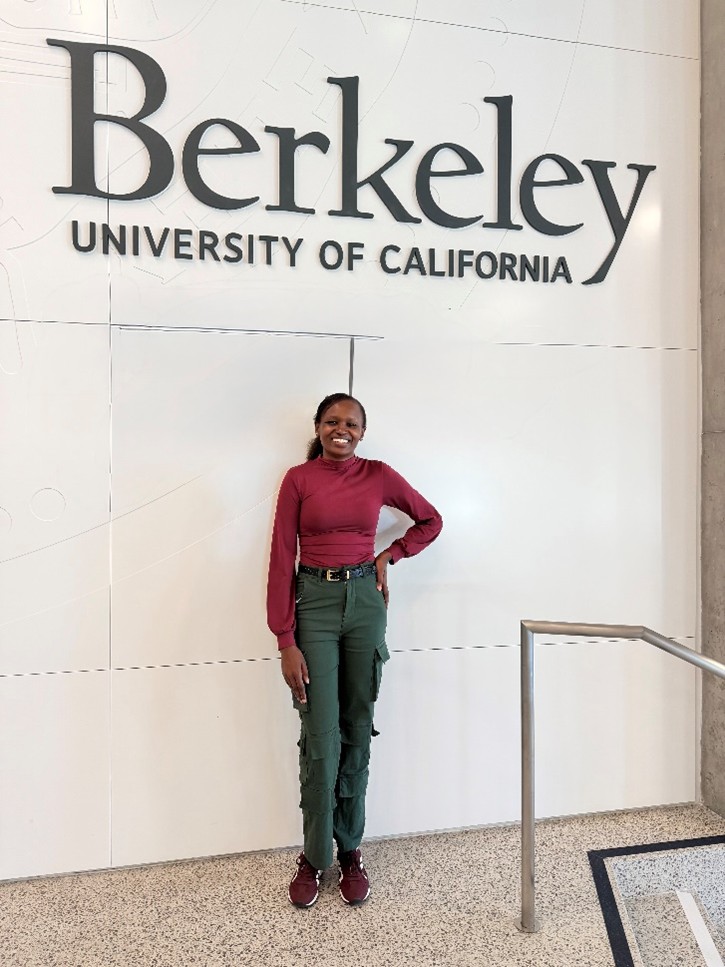
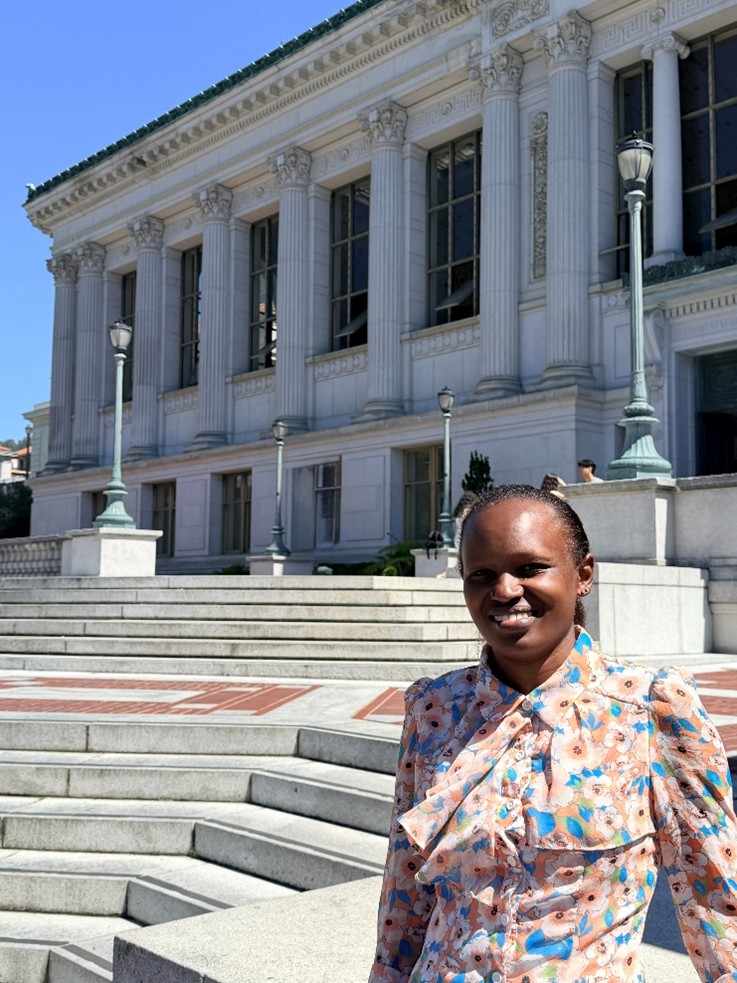
Winnie Njoroge at UC Berkeley
Activities I was rarely missing were development seminars on Mondays, where top researchers presented their work, development lunch on Tuesdays, where students presented their work, including messy results and challenges they were facing, and people would try to figure things out together. On Wednesdays, I would sometimes sit in on the Development Economics PhD course. Thursdays were for the Center for Effective Global Action (CEGA) meetings, where I got to learn more about the projects they are doing, and I would also attend labor seminars. Weekends were spontaneous. Some weekends, I caught up on my research work. Others, I explored the Bay Area. At least once a week, I would share dinner with the CEGA fellows at the international house.
Presenting at CEGA. Photo credits: Ted Miguel
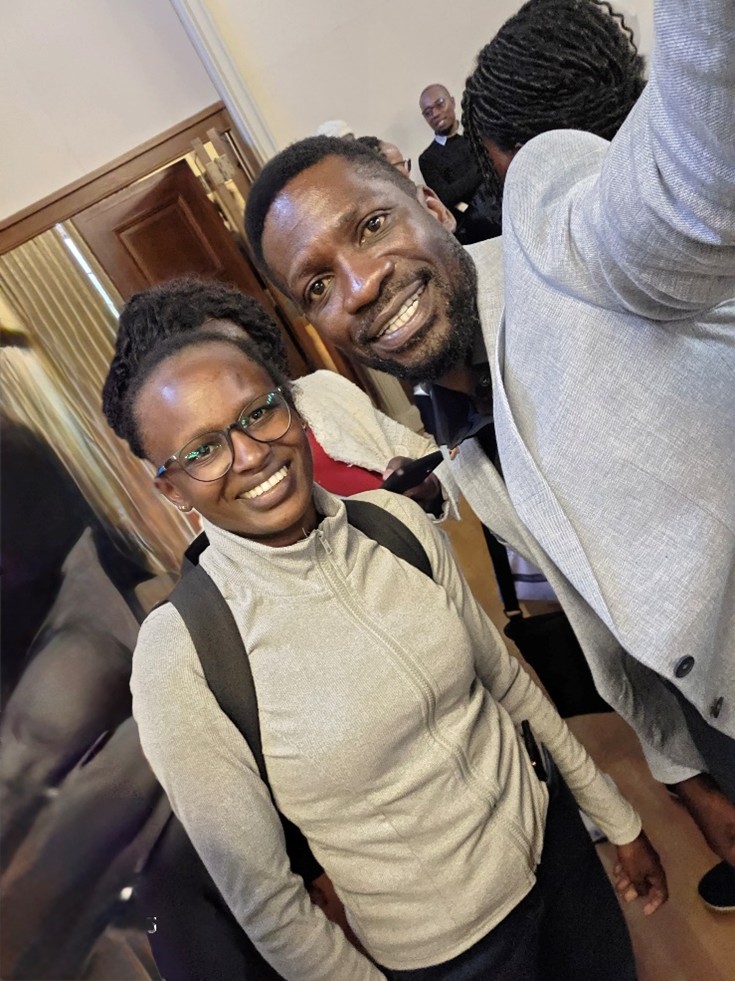
I also attended some non-academic talks in different departments. Two highlights were An Evening with Bobi Wine (Uganda’s main opposition leader), where we discussed the fight for democracy and freedom in Uganda, and Economics in Service of the Public with Erica McEntarfer, where she took us through how working in the policy realm is different from research.
“I learnt that most people are kind. Most people are happy to talk, and the worst that can happen is a short conversation, not a rejection.”
With Bobi Wine
You mentioned that top researchers presented at the development seminars. Did any particular session stand out?
Yes, Nobel laureate Michael Kremer presented at one of the development seminars. What actually stood out was that it was not a speech. I am used to Nobel laureates giving formal speeches, with an audience just listening and asking questions afterwards. This was not that. This was a normal seminar presentation where he presented his work in progress to receive feedback, and people were asking questions and giving suggestions, just like with any other presenter.
Moving the Job Market Paper Forward
What did you like most about your research stay, and what was the most challenging?
What I liked the most was how it pushed me beyond my comfort zone. In two ways, especially. First, my job market paper. I think I had reached a point where deep down I knew I needed to do something more, but I kept going in circles. I wasn’t processing exactly what I should do. At UC Berkeley, I laid my work bare. I started asking questions to help me get the paper moving: Do you think this has potential to be a good JMP? What am I missing? And people always had suggestions. Sometimes small, sometimes big, but every conversation moved me forward and created something for the next discussion. I could process the feedback, think about how to handle it, and then use the next meeting as an opportunity to refine it further. Now I have a much clearer picture of the direction to take.
“Every conversation moved me forward and created something for the next discussion.”
Second, I am not very good at starting conversations with new people. It doesn’t come naturally for me. But during a research stay, you have to approach people. So I did my best. Every time I considered walking up to someone new, there was always a fight in my head. Should I? How do I even start? I had to talk myself into it every single time. But after every successful conversation, it felt good, and my inner voice would always tell me, “Winnie, you see? It is not rocket science. It is doable.”
This last part, approaching people, was the most challenging. I won’t pretend I mastered it, but I learnt how to go about it. I learnt that most people are kind. Most people are happy to talk, and the worst that can happen is a short conversation, not a rejection.
Winnie Njoroge at UC Berkeley
What was it like working with renowned development economist Edward Miguel?
I remember walking into my first meeting with Edward Miguel. His CV was heavy on my mind: The papers, the influence, the weight of his reputation. But that all disappeared the moment he greeted me with a broad smile. Not in English, in Swahili. Then, despite his busy schedule, he didn’t jump into research. He spent half an hour just making sure I was settling in well. He asked where I was staying, pulled out his phone, and helped me figure out the best route to campus. He told me which transportation app to download, suggested seminars that would be good for me to attend, and wrote an email to introduce me to the CEGA community. He even walked me to show me the student lounge. This was my real first impression of him: not the famous economist, but an incredibly thoughtful and kind person.
With my host, Ted Miguel
Ted is very attentive and remembers even the tiniest details. He always remembered where we stopped last time, which made it easy to update him on my progress without having to remind him of our previous discussions. And despite being very busy, he always had time for me. Any time I requested a meeting, he made it happen, and never rushed our discussions. Our meetings followed a thoughtful pattern. First, he would ask if I was comfortable with my stay, with genuine concern, not just as a formality. Only then would we move on to my research: the feedback I was receiving, the ideas I was exploring in relation to that feedback, and what I was struggling with. Throughout the discussions, he would ask questions and offer good, practical suggestions that shaped my thinking.
“Now I have a much clearer picture of the direction to take.”
So it was challenging in the best way. Affirming. Genuinely humane and interesting. He treated me like a researcher who just happened to have more to learn.
Exploring San Francisco. Photo credits: Yaroslav Korobka
Academic Exchange Beyond Berkeley
Did you have opportunities to engage with the broader academic community in the US beyond UC Berkeley?
Yes, quite a few. First, within Berkeley itself, I made a point of signing up for meetings with seminar speakers whenever possible. I also attended the Berkeley Initiative for Transparency in the Social Sciences annual meeting, where researchers from academia as well as policy were present to discuss efforts to improve the credibility of social science by advancing research transparency, reproducibility, rigor, and ethics.
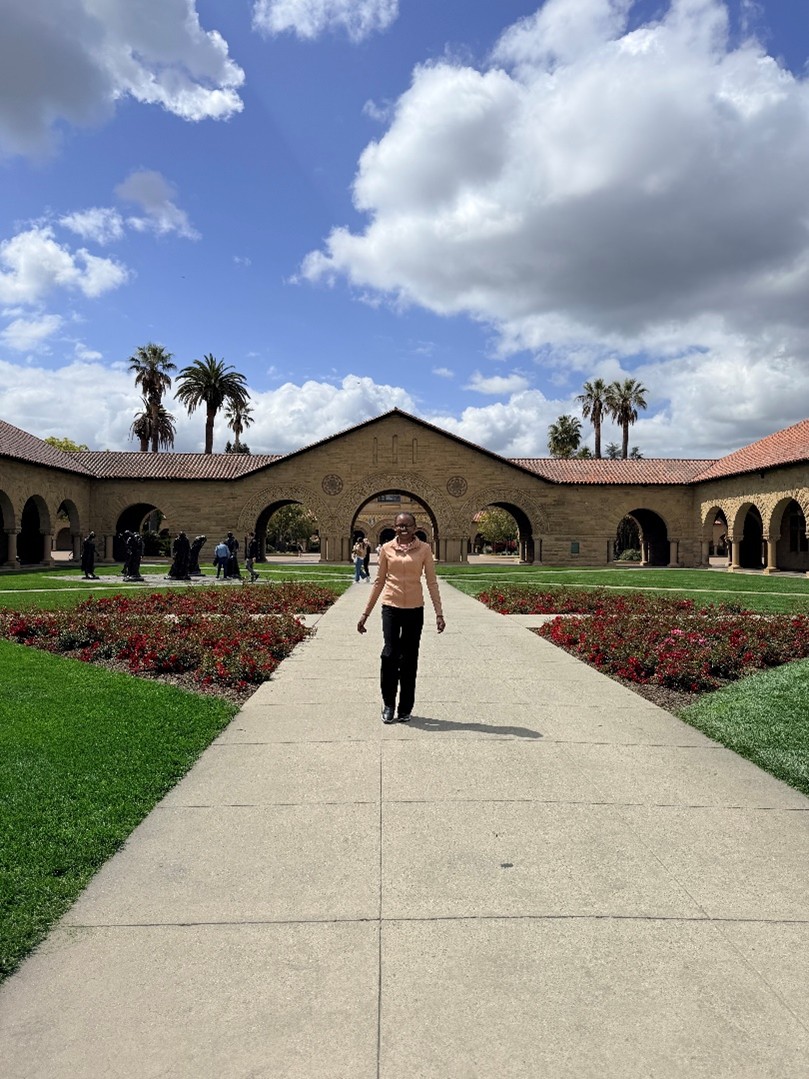
Beyond Berkeley, I visited Princeton for a week as a Stapleton scholar, and through CEGA, I spent a day at Stanford. I got to sit in on their development seminars and meet with both faculty and students. I also spent two days at UC San Diego, invited by Craig McIntosh. He gave me a lot of his time and really engaged with my research plans. We spent time brainstorming about my JMP and thinking through the next steps. That was incredibly helpful. Beyond discussions with him, I also met with other faculty and students and attended some student presentations.
At Stanford
Advice for CERGE-EI Students Planning Mobility
What would you advise CERGE-EI students who plan on going for mobility? Is it better to go with an already drafted paper, or is it better to go with a pure research idea?
I would say go with a drafted paper. It gives people something concrete to comment on. They can see your work, point to specific problems, and give you concrete suggestions. But if you don’t have a full draft yet, at least bring a clear paper idea plus some preliminary work, e.g., results or data. This way, people can still engage with your thinking and point you to a useful direction.
At UC San Diego
2 thoughts on “Finding Confidence and Community at UC Berkeley”
I’ve read all this and is very encouraging. As she says Miguel was, it’s somehow the reflection of her. She is a down to earth person to help in sharing ideas whenever she is requested to.
I am so proud of you for this amazing milestone in your PhD journey in Economics. Being at University of California, Berkeley for your research is truly a remarkable achievement and a testament to your hard work, dedication, and excellence.
Your commitment to academic growth and research continues to inspire many, and it is wonderful to see your efforts opening such great opportunities internationally. May this experience bring you more knowledge, meaningful connections, and even greater achievements ahead.
Wishing you continued success as you pursue your dreams and make an impact through your research. Congratulations once again!





I’ve read all this and is very encouraging. As she says Miguel was, it’s somehow the reflection of her. She is a down to earth person to help in sharing ideas whenever she is requested to.
Congratulations Winnie!
I am so proud of you for this amazing milestone in your PhD journey in Economics. Being at University of California, Berkeley for your research is truly a remarkable achievement and a testament to your hard work, dedication, and excellence.
Your commitment to academic growth and research continues to inspire many, and it is wonderful to see your efforts opening such great opportunities internationally. May this experience bring you more knowledge, meaningful connections, and even greater achievements ahead.
Wishing you continued success as you pursue your dreams and make an impact through your research. Congratulations once again!